ServicesCollision Repair
Collision Repair in Lemoore Station
After an accident, you want the car put back the way it was built and someone who can tell you where things stand. We repair the structure, panels and finish at our shop, and one person coordinates your vehicle from the estimate through final cleanup.
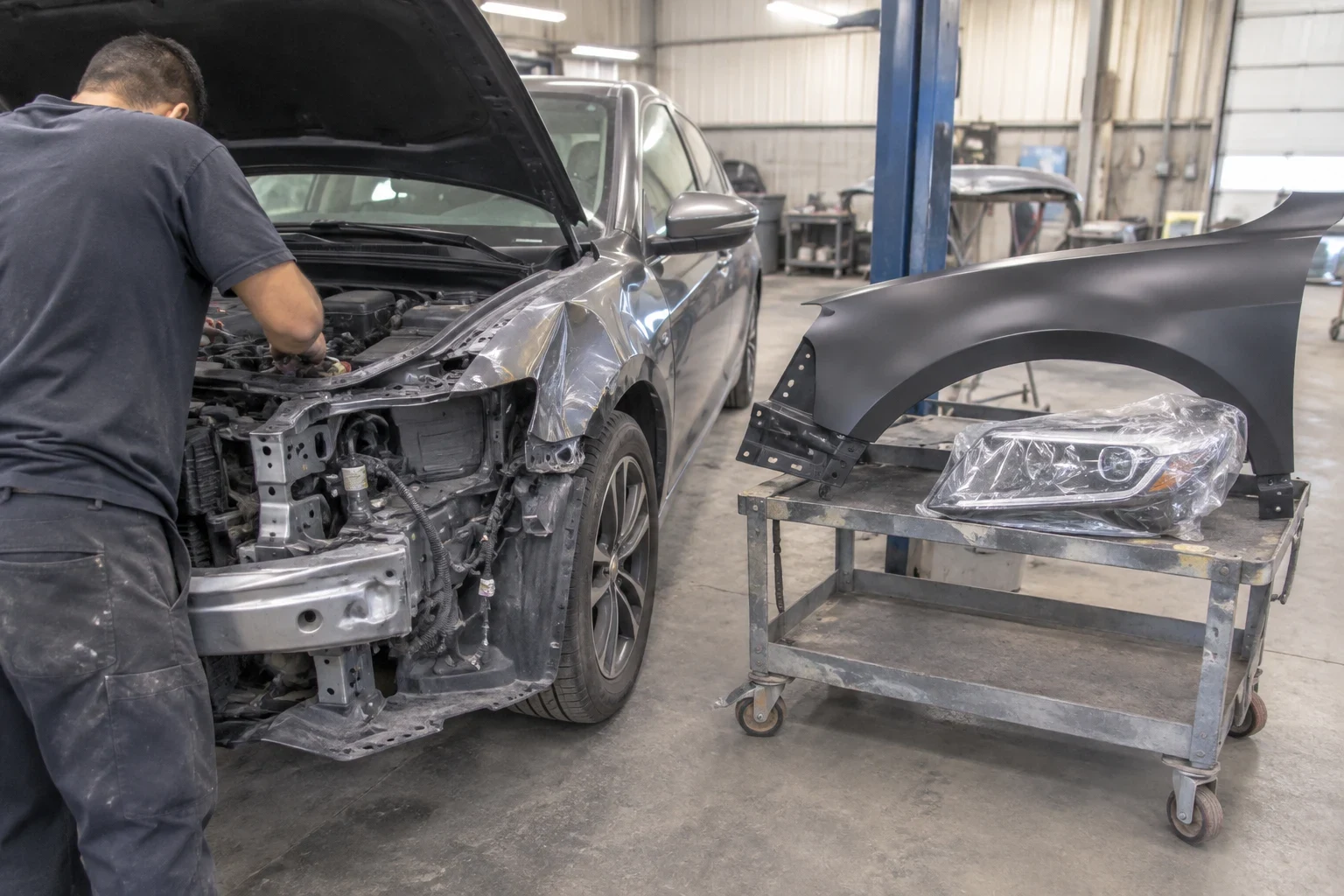
What collision repair covers
Collision repair is the work that follows a real impact: crushed panels, a pushed-in bumper, a misaligned door or hood, and often damage you cannot see behind the outer skin. Modern vehicles absorb energy through crumple zones, reinforcement bars and brackets built from high-strength steel or aluminum, and those parts have to be repaired or replaced to the manufacturer's procedures for the car to protect you the same way next time.
When you call, you reach the person who will handle your car. That same person writes the estimate, talks with your insurance company if you have a claim, updates you as parts arrive and walks you around the finished vehicle. You do not have to repeat your story to a new desk each time you check in.
Our technicians are I-CAR Gold certified, which means the people working on your vehicle train on current repair methods for today's materials and structures. If a smaller job turns out to be all you need, we will say so and point you to dent repair or bumper repair instead.
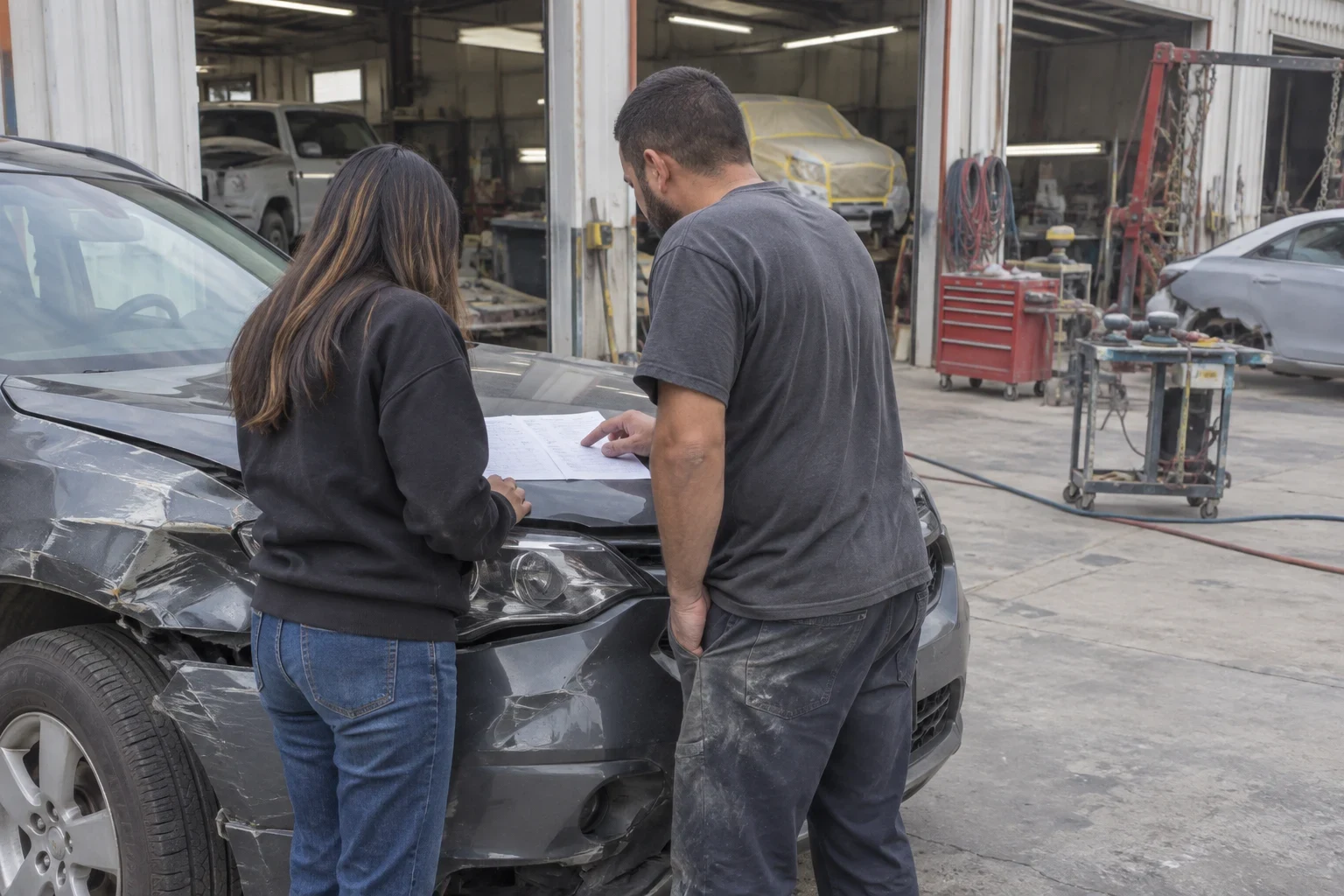
What the repair includes
- 01
Teardown and damage mapping
We remove the damaged panels and trim to see what sits behind them. Hidden damage to brackets, absorbers and mounts gets photographed and added to the repair plan before work starts.
- 02
Structural measurement
We check key points on the body against factory dimensions. If anything has shifted, the car moves to frame straightening before any outer panel goes on.
- 03
Panel repair or replacement
Some panels can be straightened and restored; others are cheaper and stronger replaced. We explain which is which and why, part by part.
- 04
A finish that reads as one surface
Each new or reshaped panel gets a sealed base, then a color mixed from your car's paint code and checked on a test card first. We carry that color softly into the surrounding panels so nothing stands out in daylight. Our paint and refinishing work gets the same attention on a small door edge as on a full quarter panel.
- 05
Systems and sensor checks
Bumpers and mirrors often hold parking sensors, cameras or radar. We scan the vehicle's systems before and after the repair and confirm those features work as they should.
- 06
Final cleanup and walk-around
Your car is washed, the interior vacuumed and the repaired areas inspected under good light. Then we walk around it with you before you drive away.
Questions about Collision Repair?
Call(559) 409-7301Signs your car needs collision repair
Gaps that no longer line up
Uneven spacing around the hood, trunk or doors usually means something underneath moved. It is one of the clearest signs the damage goes past the surface.
Doors that stick or won't latch
A door that needs a shove to close, or wind noise that was not there before, points to a shifted opening or hinge mount.
Pulling or uneven tire wear
If the car drifts after an impact, suspension or structural parts may be out of position. That affects handling, not just appearance.
Warning lights after a minor hit
Even a low-speed bump can knock a sensor out of aim. A new dashboard light after contact is worth a look.
Cracked or loose bumper cover
A cover that hangs, flexes or shows cracks often hides a bent reinforcement bar or broken foam absorber behind it.
How a collision repair moves through our shop
- 1
Your first call
You tell us what happened and whether a claim is open. We set a time for you to bring the car in for the estimate.
- 2
Estimate and repair plan
We inspect the vehicle, photograph the damage and write a line-item estimate. If insurance is involved, we send it to the adjuster and handle the back-and-forth on supplements when teardown reveals more.
- 3
Parts and structure
Parts are ordered and checked against the car when they arrive. Structural measurement and any straightening happen first, so every panel goes onto a true body.
- 4
Body, paint and reassembly
Panels are fitted, gaps set and paint applied in the booth, then cured before reassembly. Trim, lights and sensors go back in and get tested.
- 5
Pickup
Your contact calls when the car is ready, walks you through what was done and hands over the paperwork.
What moves the cost of collision repair
No two collisions cost the same, and the visible damage rarely tells the full story. We write the estimate line by line and update it in writing if teardown uncovers more, so you see why each number is there before work continues.
- Hidden damage behind the panels
- Brackets, absorbers and reinforcement bars often account for a real share of the bill. We find them during teardown, not after the car is back together.
- Parts and materials
- Aluminum panels, high-strength steel and factory parts take different repair methods and carry different prices. Availability also affects how long the car stays with us.
- Structural work
- Measuring and straightening add labor, but they are what make the car drive and protect you correctly afterward.
- Paint and blending
- Tri-coat and pearl colors need more steps to match, and blending into neighboring panels adds time that keeps the finish consistent.
- Sensors and electronics
- Cameras and radar units in bumpers and mirrors may need replacement or calibration once the repair is done.
Collision repair questions
Can I choose your shop even if my insurer suggests another one?
In California you can have your car repaired at the shop you choose. Your insurer may recommend shops, but the decision is yours. We work with your insurance company on the estimate either way, and our Insurance Claims page covers what that looks like.
Who do I call for updates while my car is here?
The same person who wrote your estimate. They know your car, your claim and where the parts stand, so one call gets you a real answer instead of a transfer.
What happens if you find more damage once the car is apart?
We photograph it, add it to the estimate and send a supplement to your insurer if there is a claim. If you are paying directly, we call you and explain it before any added work begins.
How long will the repair take?
It depends on parts availability, the amount of structural work and insurance approvals. We give you a realistic timeline once the estimate is done and tell you right away if anything changes it.
How do you get the color right on a car that has a few years on it?
We start from the factory paint code, then spray test cards and hold them against your actual panels, because original paint shifts as it ages under strong valley sun. Once the shade is right, we fade it into the panels around the repair so there is no hard edge where old finish meets new.
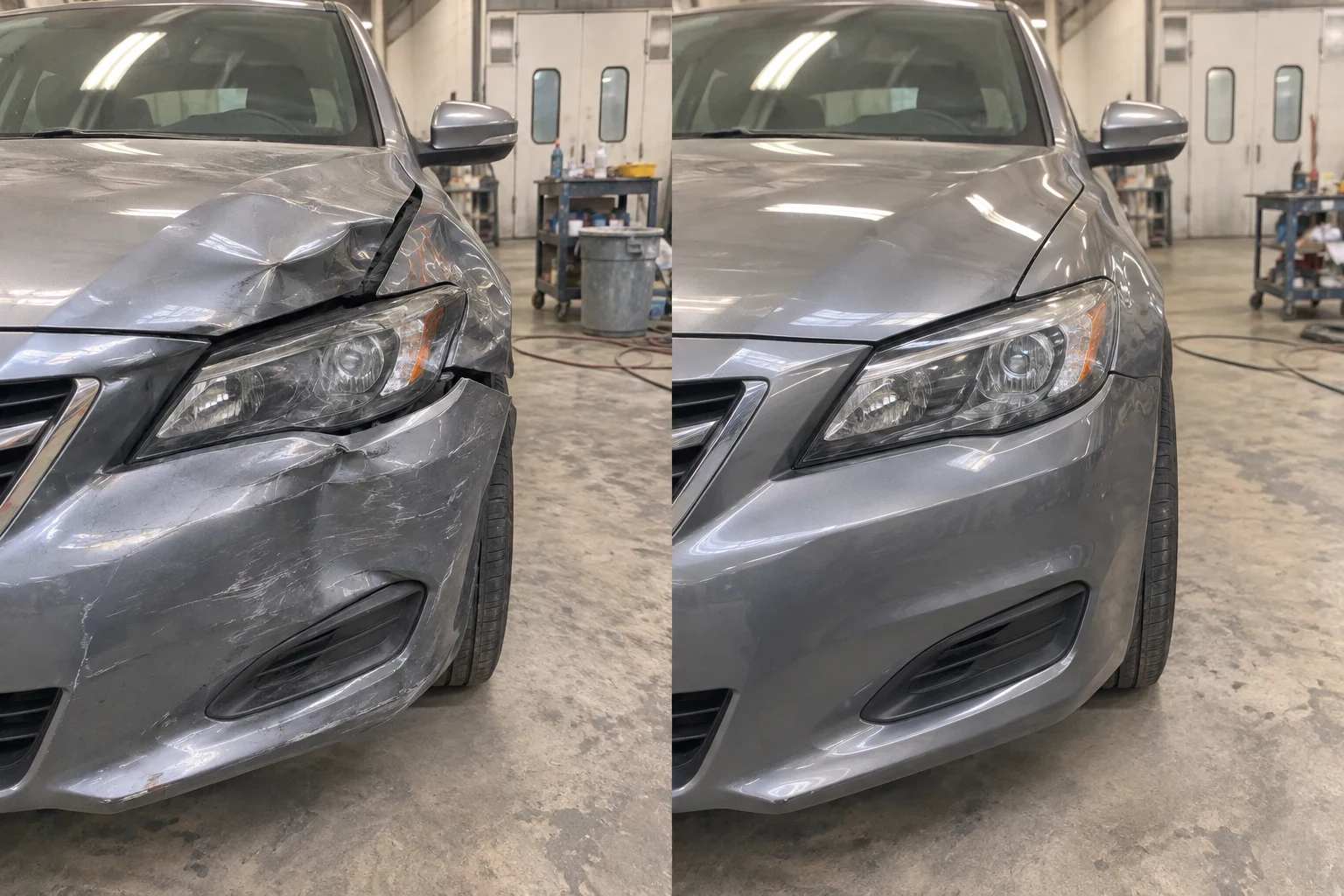
Bring your car in for a look
Tell us what happened and we will set a time to inspect the damage and write the estimate. From there, one person keeps you informed until the car is back in your hands.