ServicesFrame Straightening
Frame Straightening in Lemoore Station
A hard hit can move your car's structure even when the outside looks fixable. We measure the frame or unibody against the manufacturer's dimensions, pull it back in controlled stages and confirm it with a final measurement before any panel or paint work begins.
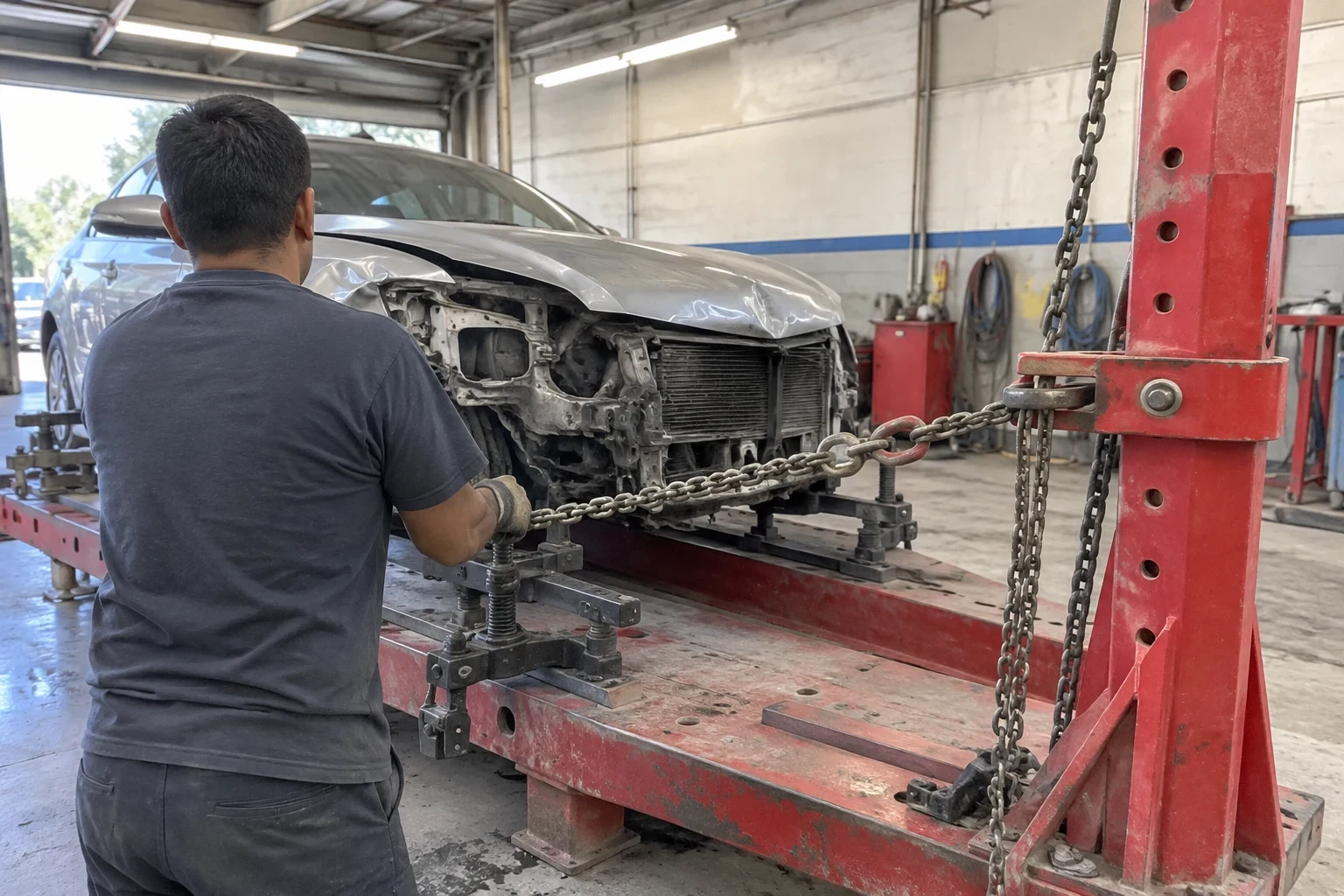
What frame straightening fixes
Most cars on the road today are unibody, which means the floor pan, rails and pillars form one welded shell. Trucks and many larger SUVs still sit on a separate full frame. In both cases the structure sets where the wheels, doors, hood and suspension mount. If it is out by even a small amount, new panels will not line up and the car may never drive straight.
Frame straightening is the work of returning that structure to its factory position. Your car is anchored to a straightening bench, measured at fixed reference locations and pulled back with hydraulic force in small, checked steps. Where metal is kinked beyond safe repair, the manufacturer's procedure usually calls for sectioning or replacing the part instead of pulling it.
One person here handles your car from the first measurement to the day you pick it up, so you are not passing the same questions between a body tech, a frame tech and a front desk. Our shop is I-CAR Gold certified, and structural repair is the work where that training matters most.
What the work includes
- Pre-repair measurement
- We check the structure at the measuring locations the manufacturer publishes and record how far each one has moved. That record becomes the plan for the pull.
- Anchoring and staged pulls
- The car is clamped to the bench at its pinch welds or frame mounts. We pull in several directions at once, release, and measure again, so the metal moves back the way it came instead of stretching.
- Section or replace when needed
- Rails, aprons and supports that are torn or sharply kinked are cut and replaced following the repair procedure for your vehicle. We will tell you which parts we are replacing and why.
- Corrosion protection
- Welds and bare metal inside the rails get seam sealer and cavity coating so the repaired area resists rust the way the original did.
- Final measurement and alignment check
- Before the car moves on to panels and paint, we measure the whole structure again. A wheel alignment follows once the suspension is back together.
Signs your car may need frame work
Uneven panel gaps
The gap between the hood and fender, or around a door, is wider on one side than the other. That usually means the mounts underneath have moved out of place.
Latches that fight you
If a door suddenly needs a firm shove to close, or the trunk lid rides higher on one corner than it did before the accident, the body shell around those openings has likely moved.
Pulling or odd tire wear
If the car drifts after an accident and an alignment does not cure it, the suspension mounts themselves may be out of position. Uneven wear on new tires is another clue.
Creases underneath
Wrinkles in the floor pan, the rails behind the bumper or the inner wheel well are a direct sign the structure absorbed the impact.
Airbags deployed
A collision hard enough to fire the airbags almost always deserves a structural measurement, even if the damage looks limited to the front end.
What affects the cost of frame straightening
Frame work is priced from the measurement, not a guess at the outside damage. Two cars with similar dents can need very different amounts of structural repair. Structural labor, parts and refinishing each appear as their own lines on the written estimate, so nothing is bundled out of sight.
How far the structure moved
A rail that is a few millimeters out takes one or two pulls. Damage that runs from the bumper back to the firewall takes far more bench time.
Pull versus replace
Bent metal can often be pulled. Kinked or torn metal usually has to be sectioned or replaced, which adds parts and welding time.
Unibody or full frame
Unibody repairs often involve more welded panels. Full-frame trucks may need frame sections or mounts that are heavy and sometimes slow to source.
Related systems
Suspension parts, sensors and driver-assist cameras mounted to the structure may need replacement or recalibration after the frame is corrected.
How a frame repair moves through our shop
- 1
Talk it through by phone
You describe the accident and what you are noticing. We tell you what to bring and whether the car is safe to drive in or should be towed.
- 2
Inspection and estimate
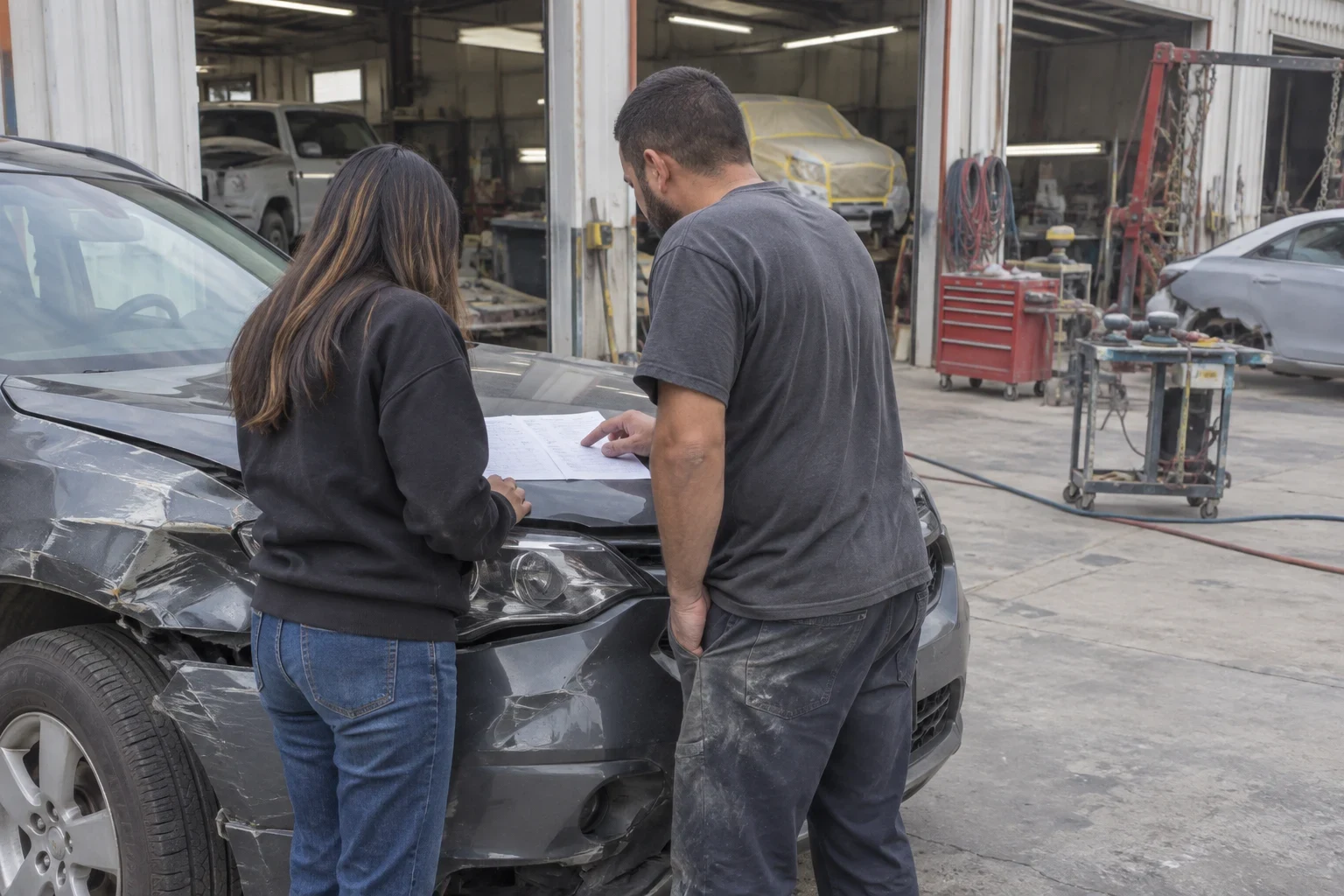
We put the car on the lift, measure it and write the estimate with the structural work listed separately from panels and paint. If an insurance claim is involved, we send the adjuster the measurements.
- 3
Bench work
The car is anchored, pulled in stages and re-measured until every reading is back within the manufacturer's tolerance. Damaged structural parts are replaced as the procedure requires.
- 4
Body, paint and reassembly
Once the structure is right, the car moves on to panels, bumper repair and paint and refinishing as needed. The same person keeps you updated through each step.
- 5
Final check and pickup
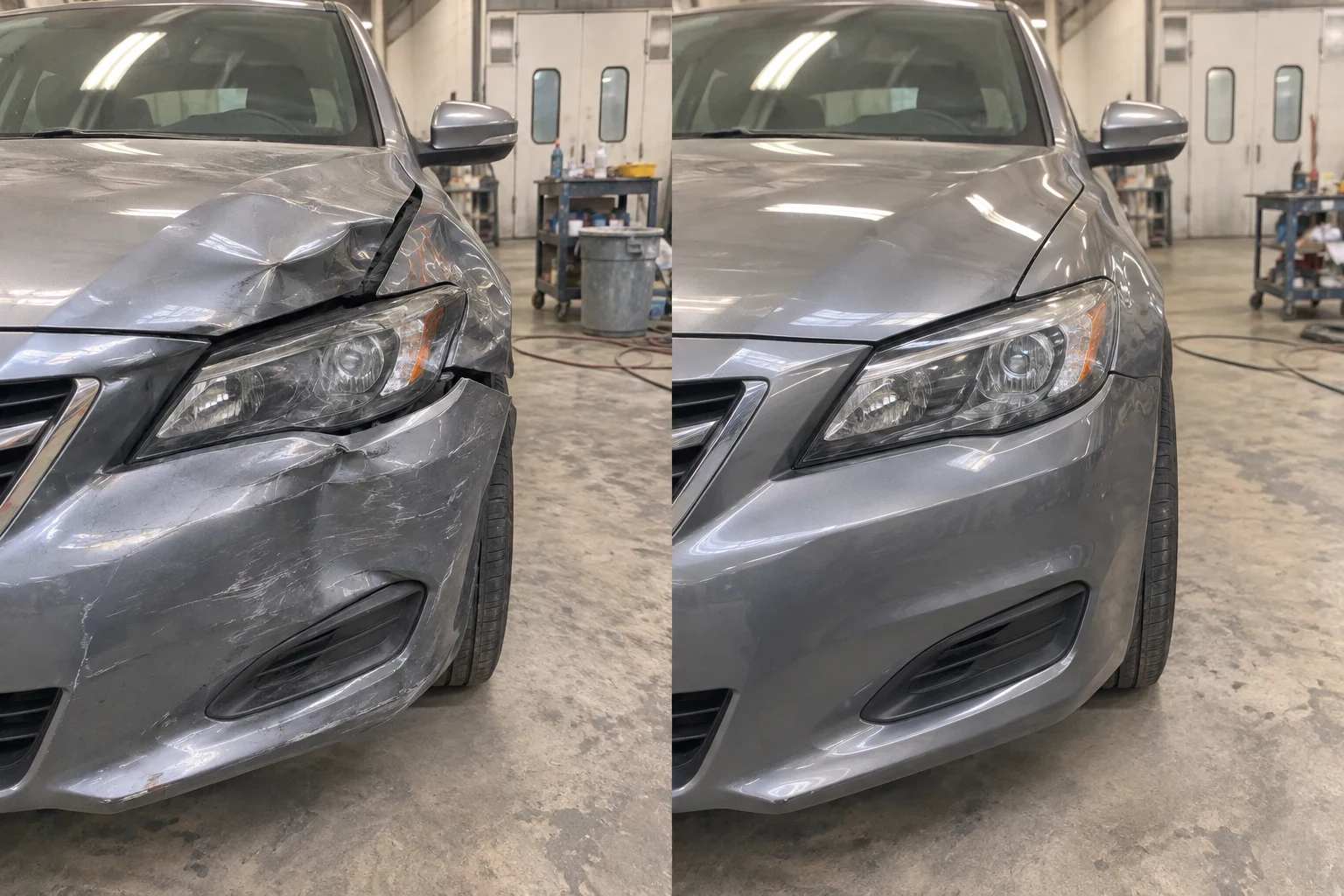
We review the before and after measurements with you, confirm the alignment, test drive the car and hand it back clean.
Frame straightening questions
Can a bent frame really be fixed safely?
Yes, when the repair follows the manufacturer's procedure and is confirmed by measurement. Many parts are designed to be pulled back; others are designed to be replaced, and we follow that line. The final numbers show whether the structure is back where it belongs.
If the frame is bent, will insurance write my car off?
A bent frame alone does not settle that. Your insurer weighs the cost of the repair against what the car is worth, and that comparison drives the decision. Many cars with structural damage are repaired and go back on the road. Our estimate lists the structural work line by line, with measurements, so the adjuster has what they need.
How long will my car be with you?
We cannot give a fair answer until the car has been measured. Time on the bench is often shorter than the wait for parts or the body and paint work that follows. After the inspection you get a realistic timeline, and the same person calls you if it changes.
Can I drive my car in, or should it be towed?
If the wheels sit straight, the car steers normally and nothing is dragging, driving in is usually fine. If it pulls hard, rubs a tire or shows warning lights for brakes or airbags, have it towed. Tell us what you see on the phone and we will help you decide.
Will you work with my insurance company?
Yes. We share the measurements and photos with your adjuster and handle supplements if hidden damage turns up once parts come off. Our Insurance Claims page explains how that process usually goes.
Find out where your car's structure stands
Describe the accident and what you have noticed since. We will tell you what the inspection involves and what to expect next.